 Skip to content
For a fully automatic block or paver plant, choose GMT or steel pallets. They stay flat under vibration and last many years. PVC suits semi-automatic fly ash brick plants that cure at room temperature. Bamboo and wood are cheap to start with but wear out fast. Whatever the material, every pallet in a set must be the same thickness. Then compare options by cost per cycle, not purchase price.
We make block, brick and paver machines in Ahmedabad, and the pallet question comes up on almost every plant we commission. Buyers spend weeks comparing machines and then order pallets in an afternoon. That is backwards. A cheap pallet that bends a few millimetres will undo the precision of a good machine, one block at a time.
This guide covers what we tell our own customers: which material fits which plant, how many pallets you need, and how to work out what a pallet really costs.

The pallet is the floor of the mould. Concrete or fly ash mix is filled and vibrated on top of it, compacted, and pushed out of the mould as a fresh block. The block then rides on that same pallet to the stacker and the curing area, and stays there until it is strong enough to handle.
So the pallet does three jobs at once:
• It carries vibration: If the pallet flexes or sits unevenly on the table, part of the vibration energy is lost. You see it as weak corners and blocks that break at the edges.
• It sets block height: The machine measures height from the pallet surface. A pallet that is 2 mm thinner than the rest gives you a block that is 2 mm off, and pavers that do not sit level on site.
• It holds the block while it cures: Heat, water and the weight of wet concrete all work on it for hours every day.
A pallet that warps, swells or cracks fails at all three. That is why we treat pallets as part of the machine, not as a consumable.

GMT and steel last longest. PVC sits in the middle. Bamboo and wood are the cheapest to buy and the first to be replaced.
| Material | Typical life | Weight | Heat limit for curing | Best for | Watch out for |
|---|---|---|---|---|---|
| GMT (glass-fibre reinforced plastic) | 6 to 10 years | Light | About 80 °C | Fully automatic block and paver lines | High upfront price; low-grade GMT with less glass fibre bends sooner |
| Steel | 10 years or more | Heavy | No practical limit | Steam curing, heavy blocks, high-output lines | Rust if not oiled; adds load on conveyors and stackers |
| PVC | 5 to 8 years | Heavy, about 30% more than GMT | Keep under about 60 °C | Semi-automatic fly ash brick and block plants with room-temperature curing | Softens and sags in steam curing |
| Bamboo or bamboo-wood composite | 2 to 4 years | Medium | Up to about 100 °C | Budget plants with careful handling | Edges split; swells if the coating wears off |
| Plain wood | 1 to 3 years | Medium | Low | Very small or manual plants | Warps with water, which quickly spoils block height |
These are typical figures from pallet suppliers’ published data, and they vary a lot between grades. Ask for the data sheet and the thickness tolerance in writing before you order. In our experience, the grade of a material matters as much as the material itself. A good PVC pallet will outlast a poor GMT one.


The right pallet depends on four things: how automatic your line is, how you cure, what you make, and where the pallets are stored.
On a manual or semi-automatic fly ash brick plant, pallets are handled by people and the cycle is slower. PVC or steel works well here. On a fully automatic line with a stacker, a cuber and a curing chamber, the pallet is moved and lifted by machine thousands of times a day. Go for GMT or steel. A light pallet like GMT also puts less wear on conveyors.
For open-yard or room-temperature curing, any of the plastics will do. For steam curing or a heated chamber, use steel or a GMT grade rated for that temperature. Do not put PVC in steam.
Hollow and solid blocks are forgiving. Paver blocks and kerb stones are not. A coloured paver face shows every millimetre of height difference, so flatness matters most for pavers. Heavy kerb stones and tall blocks need a stiffer pallet, which usually means steel or a thicker GMT.
If empty pallets stand outside through the monsoon, plain wood and worn bamboo will swell. Plastic and well-oiled steel handle it better.
A simple rule we give customers: if you are not sure, match the pallet to your heaviest product and your hottest curing condition, not your average day.
Size. The pallet must be a little larger than the mould on every side, so the mould frame sits fully on it. The exact length and width are set by your machine model. Always take the size from your machine maker’s drawing, not from a pallet catalogue.
Thickness. It matters less what the thickness is than that every pallet in the set is the same. Mixed thickness is the most common cause of uneven block height we see on site. When you reorder, get the same thickness and grade as your existing set, or replace the whole batch.
How many pallets? Each pallet is out of use until its blocks are cured enough to take off. So you need enough pallets to cover a full curing period, plus spares.
Pallets needed = cycles per day × days blocks stay on the pallet × 1.1
For example, a machine running 3 cycles a minute makes 180 cycles an hour. Say it runs 8 hours a day and blocks stay on the pallet for one day. That is 180 × 8 = 1,440 cycles, so 1,440 pallets plus 10% spare, which comes to about 1,600. Buyers often order half that, and the machine ends up waiting for pallets instead of making blocks.
The cheaper pallet is often the more expensive one once you count how many cycles it lasts. Work it out like this:
Cost per cycle = (price + repairs over its life) ÷ cycles over its life
Here is an example with round numbers:
| Pallet A | Pallet B | |
|---|---|---|
| Price per pallet | ₹6,000 | ₹2,500 |
| Life | 5 years | 2 years |
| Cycles over its life (1 a day, 300 working days a year) | 1,500 | 600 |
| Cost per cycle | ₹4.00 | ₹4.17 |
On paper they look close. But Pallet B has to be replaced as a full set every two years. That means another bulk order, a stop in production while the new set arrives, and more broken or uneven blocks as the old set wears. Once you add those costs, Pallet A usually comes out well ahead.
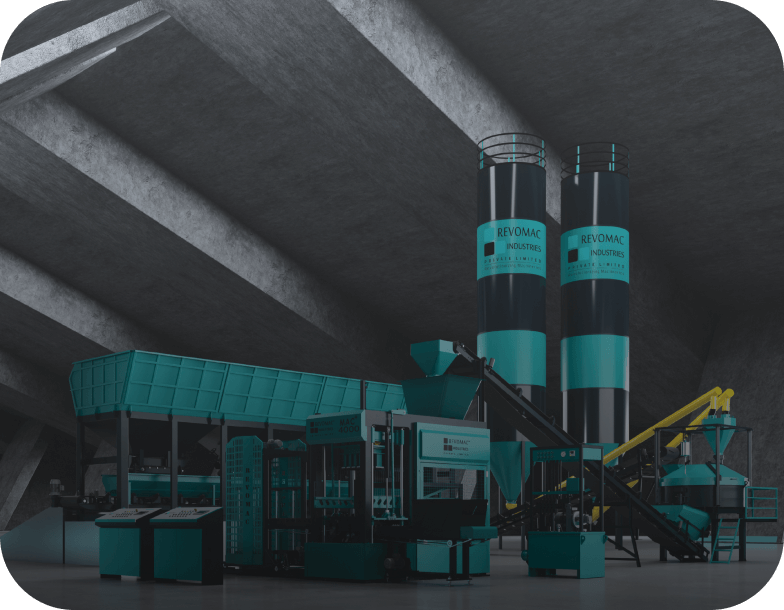
Revomac Industries has built block, brick and paver machines in Ahmedabad since 2014. We size and supply pallets together with the machine, so you are never left matching a third-party pallet to our mould.
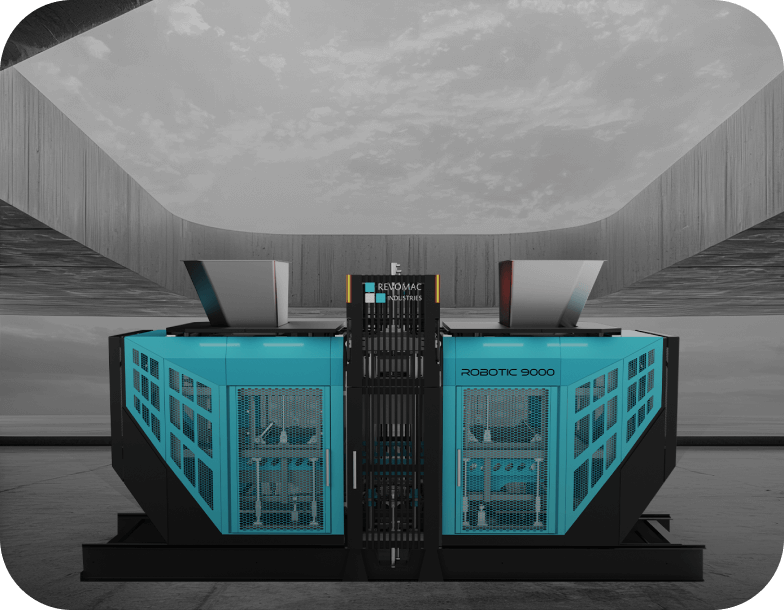
On our fully automatic Jaguar 9000 plant we went a step further. The pallet has legs and works as its own rack in the curing chamber. You do not need to fabricate separate curing racks, and there is one less transfer step for the fresh blocks. The Jaguar 9000 makes products up to 300 mm high.
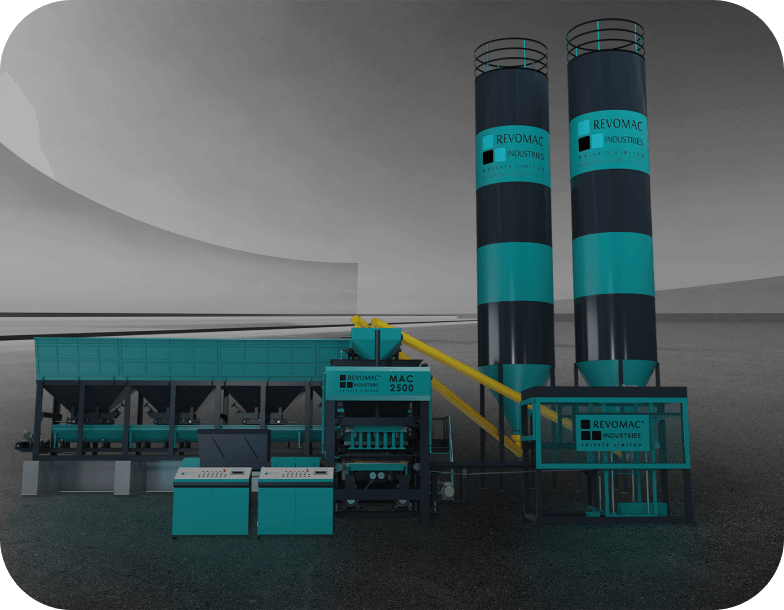
For our MAC series machines (MAC 1400, MAC 1800 and MAC 2500), we suggest the pallet material based on your product mix and curing method, and supply every pallet cut to that machine’s mould size. A common mistake we see is a plant buying a good machine and then saving money on a mixed batch of pallets from different suppliers. The machine then gets blamed for uneven blocks that are really a pallet problem.
If you are planning a new plant or replacing a set, send us your machine model, products and curing method. We will tell you which pallet to use and how many you need.
For a semi-automatic fly ash brick machine with open-yard or room-temperature curing, PVC or steel pallets are a sound choice. If the plant is fully automatic, or you cure with steam, choose GMT or steel.
Usually yes, for automatic lines. GMT is lighter, stiffer and handles higher curing temperatures. PVC costs less and works well on slower plants that do not steam cure.
Yes. Steel pallets stay very flat and last longest, which suits pavers. They are heavy and need oiling to stop rust, so check that your conveyor and stacker are built for the extra weight.
It depends on the material and grade. As a rough guide, wood lasts 1 to 3 years, bamboo 2 to 4, PVC 5 to 8, GMT 6 to 10, and steel 10 years or more with good care.
Only if they are the same thickness and still flat. Mixing worn and new pallets is a common cause of uneven block height.
Look them over every shift for cracks and stuck concrete. Check flatness with a straight edge at least once a week, and more often on high-output lines.